Podcasting is the voice of the people.

We have been in podcasting since the game began. We never guessed that it could be so powerful, but important voices are being lifted up higher than ever before.  

Your voice matters.

We work with our podcasters to make sure that their stories and series are meaningful. Sound quality is important, but we push our hosts to strive for impact and widen their reach. 


Latest Episodes

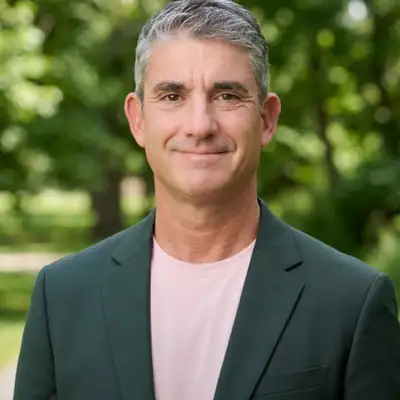
Latino Professionals in Corporate America Plan Further Ahead: Why Culture Is an Asset and Not a Liability with Dr. Daniel Custódio

Dr. Daniel Custódio's research found that Latino professionals plan further ahead than their peers in corporate America, and that the culture they were told to leave at the door is the asset that carries them. In this episode of The Stronger Podcast, Mike Montoya sits down with Daniel, transformation executive, professor, and author of Code Mastering, to talk about turning a dissertation into a map for the people coming behind him. Daniel's mother immigrated from Belém do Pará and his father from Portugal. His first memory of school is a kindergarten classroom in Sleepy Hollow where he could not understand the language and did not yet know he was nearsighted, in a district with no ESL program. He got to Hamilton College as a first generation student and spent his summers working as a janitor alongside his father while classmates lined up internships. The call that got him into GE's leadership program he took from a payphone on his lunch break. He went back for the doctorate at 45, with three daughters at home, because he wanted to leave them the research he never had. Mike sat in one of the focus groups. What came out of it is what Daniel calls identity work: being multilingual drew looks at the grocery store as a kid and later became the reason he could move through international markets. Tune in to hear why the messages that mean the most to Daniel are from Latino professionals who buy a second copy of the book for their kids.   Chapters: 👓 02:22 Daniel Custódio started kindergarten unable to see or understand the class 🎓 05:51 First generation at Hamilton with no playbook for internships or networking 📐 09:31 Six Sigma gave him the framework he did not have walking in 👨‍👧‍👧 20:20 Back to school at 45 to leave his daughters a map ♟️ 24:02 Planning several moves ahead as a countermeasure to discrimination at work 🦸 26:00 Speaking Spanish drew stares as a kid and became a career superpower 📖 33:29 Identity work means treating your culture as an asset, not a liability 🎤 38:34 From national slam champion to the TED stage 🤝 41:39 The mentor he wishes he had found fifteen years earlier Links: LinkedIn: linkedin.com/in/codemastering Website: drdanielcustodio.com TED Talk: youtu.be/qfdYRB0JrMg Connect with Dr. Daniel Custódio on LinkedIn or visit his website to learn more about Code Mastering and the identity work behind it. His TED Talk is the six minute version, built around an orchestra in Paraguay that made its instruments out of what other people threw away.   Connect with Mike: www.linkedin.com/in/mmsc Stronger Consulting: strongerconsulting.com Publish a Book That Matters:  booksthatmatter.org Start a Podcast That Matters:  podcastsmatter.com Go from Expert to Thought Leader: geniusdiscovery.org  For more great podcasts like this one, visit https://podcaststhatmatter.org Stay strong. 
#110 of Ronderings

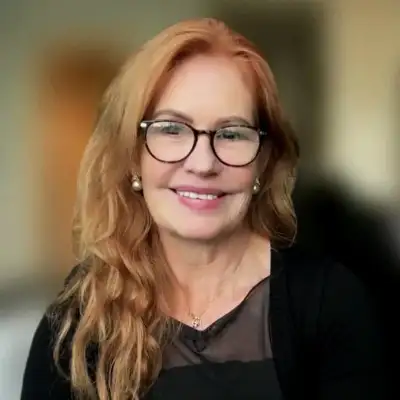
Whistleblowing With Rhythm: Coast Guard Reform, Carnival Energy, and Practicing the Future with Dr. Kim McLear

Civic designer and movement strategist Dr. Kim McLear spent twenty years in the Coast Guard, and ten of them running a whistleblowing campaign built on carnival rhythm instead of the lone hero. In this episode of Ronderings, Ron sits down with Kim, a systems engineer turned artist and movement builder, to talk about how she reimagined whistleblowing as a collective practice with rhythm and discipline. Kim is a first generation American raised by Trinidad and Tobago immigrant parents who each served nearly thirty years in the military. She started school in Okinawa and finished high school in Germany, with 18 cities behind her before she could vote. She still has a scar on one finger from opening a reinforced steel door during a cyclone to get a better look at the trees dancing. Hours under the hood of cars with her father taught her that changing one part changes the whole system, which is the thread that runs to her PhD in systems engineering. She picked the Coast Guard because it was the furthest thing from anything she knew, water included. When she spoke up, she refused the single hero version and built a survivor led coalition of thousands while continuing to serve as an officer and teach as a professor. She stayed disciplined about describing behavior rather than calling people names, and over a ten year arc that work helped surface a CNN investigation and new federal laws. Tune in to hear why Kim calls despair a design feature of oppressive systems, and what practicing the future looks like when it starts with a paint bucket and a couple of friends.   Chapters: 🧵 02:39 Dr. Kim McLear: engineer, professor, and Coast Guard whistleblower 🌍 07:47 Dignity for all living systems, not just the human ones 🌀 11:55 Cyclones and car engines: the making of a systems engineer ⚓ 25:45 Why she joined the branch furthest from her comfort zone 🥁 30:18 Whistleblowing with carnival rhythm: no one whistles a symphony alone 📰 38:36 The ten year arc behind the CNN investigation and new federal laws 🚫 49:59 Never call people names: describe the behavior instead 🎷 01:01:42 Practice the future: grab a paint bucket and a couple of friends 🎭 01:04:11 Despair is a design feature of oppressive systems Links: LinkedIn: https://www.linkedin.com/in/justdrkim/   Connect with Dr. Kim McLear on LinkedIn to follow her work as a civic designer and movement strategist building education ecosystems for movement builders. Her practice draws on music and rhythm to help communities move from fragmentation toward coherence, which is the same practice she walks through on this episode.  Connect with Ron: www.linkedin.com/in/rapatalo Check Out Ron's Book: www.amazon.com/dp/1613431473  Leverage Publishing Group: www.leveragepublishinggroup.com Publish a Book That Matters: http://booksthatmatter.org Start a Podcast That Matters: http://podcastsmatter.com Go from Expert to Thought Leader: http://geniusdiscovery.org 

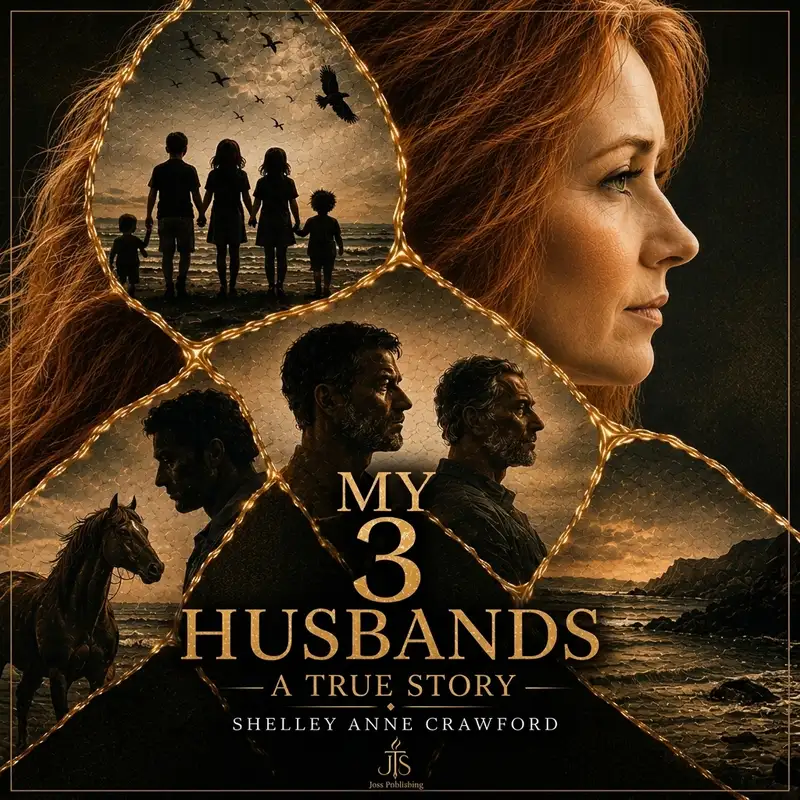
Chapter 1: Tied Together

Sudden loss splits a life into a before and an after. Shelley Anne Crawford's memoir My 3 Husbands: A True Story opens on the Monday afternoon the phone rang twice. In this first episode of the My 3 Husbands Audiobook Podcast, Shelley reads Chapter 1, "Tied Together," and then sits down with her editor, Dr. Kent Gustavson, to talk about what she just read. The chapter finds her in the art room of her country house in Ireland, children painting around her, cookies cooling in the kitchen. She had built that life out of the wreckage of an earlier one, in a village far enough away that it felt like a place no pain could reach. The phone rings and she lets it go. She never answers on the first go. A minute later it rings again, and it is her daughter Jessica, calling from London. Kent reads the chapter back to her through its senses, the ringing, the silence, the sound of the ocean in her ears though she lives miles from the sea. Shelley talks about the tsunami dreams she has had for years, and about why the only word she could reach for was "gone." Then she says something harder. There were times she had wished he would go missing, or get hurt. Tune in to hear why Shelley believes there is beauty even here, and why, as she puts it, it is not like someone dies and then everything goes black. This episode refers to sudden death and suicide. Please take care while listening. Chapters: 📖 00:04 Shelley Anne Crawford introduces the memoir and a note before listening 🖌️ 00:50 The art room in Ireland, and a life rebuilt out of wreckage 📞 01:52 The phone rings twice, and the only word left is gone 🐚 03:04 The ocean in her ears, and years of tsunami dreams 🤲 06:49 The smell of oil paint, and the forgiveness running through the book 🪞 11:19 Admitting she once wished he would go missing, or get hurt 🌅 13:00 Why everything does not go black when someone dies Connect with Shelley: LinkedIn: https://www.linkedin.com/in/shelleyannecrawford2026/ Substack: https://shelleyannecrawford.substack.com/ Website: www.jessglobal.org

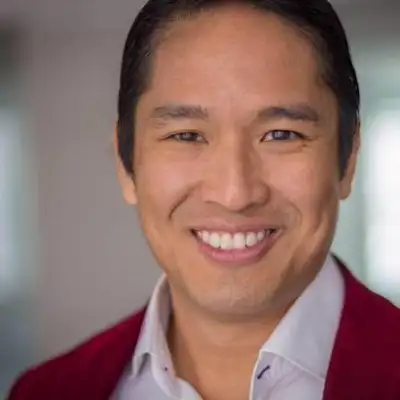
Teacher Attendance Predicts Turnover: The Retention Signal Most School Systems Miss with Dr. Tommy Chang

Teacher attendance is the clearest early warning sign of teacher turnover, and Dr. Tommy Chang, CEO of New Teacher Center, says most school systems are not watching it. He was not watching it either when he ran Boston Public Schools. In this episode of The Stronger Podcast, Mike Montoya sits down with Dr. Tommy Chang, CEO of New Teacher Center and former Superintendent of Boston Public Schools, to talk about what actually keeps new teachers in the classroom. Tommy immigrated from Taiwan at six without a word of English. His first grade teacher, Helen Cowles, taught him to read and write, and he traces his belief in public education back to that classroom. He came into teaching on an emergency credential in Compton in 1997, which is why he will not argue about pathways. Whether a teacher arrives through a traditional program or through a state that now allows almost no credentialing, his position is that the coaching has to be guaranteed either way. He and Mike get into the numbers most systems overlook, including why attendance predicts turnover twelve to eighteen months out and why district-level data hides what is actually happening school by school. Tommy also names the leadership shift he has made, away from the warrior superintendent who runs through walls and toward what Atul Gawande called pit crews rather than cowboys. He is honest that the tension between urgency and patience has never resolved for him. Tune in to hear why Tommy thinks the real job for leaders of his generation now is learning to get out of the way.   Chapters: 🌎 01:49 Tommy Chang arrived at six without English and later ran Boston's schools 📉 07:06 Teaching careers now run six to eight years, not fifteen 🏫 09:37 Why turnover only makes sense when you read it school by school 📊 15:33 Teacher attendance predicts turnover twelve to eighteen months out 🏛️ 21:23 The Carnegie unit and a school model still designed for 1908 🏁 30:33 From the warrior superintendent to pit crews instead of cowboys 🔀 39:20 From Strength to Strength and the pivot from doing to coaching 🧵 41:08 Find your role in the movement and lean into your strengths Links: LinkedIn: linkedin.com/in/drtommychang New Teacher Center: newteachercenter.org New Teacher Center on LinkedIn: linkedin.com/company/new-teacher-center Connect with Dr. Tommy Chang on LinkedIn or explore New Teacher Center's work to see how school systems build the capacity to coach and mentor their newest teachers.   Connect with Mike: www.linkedin.com/in/mmsc Stronger Consulting: strongerconsulting.com Publish a Book That Matters:  booksthatmatter.org Start a Podcast That Matters:  podcastsmatter.com Go from Expert to Thought Leader: geniusdiscovery.org  For more great podcasts like this one, visit https://podcaststhatmatter.org Stay strong. 
#109 of Ronderings

Create the Conditions: Authentic Leadership, Code Switching, and Being the Only One with Gold Chhim

Gold Chhim leads national partnerships at Education Pioneers. For years he kept his identity and his leadership in two separate lanes, and closing that gap is what he now means by authentic leadership. In this episode of Ronderings, Ron sits down with Gold, Managing Director of Partnerships at Education Pioneers, to talk about what it costs to be the only one in the room and what changes when you stop paying it. Gold grew up on the east side of Compton, the son of a Cambodian refugee mother who told him his job was education. His schools were roughly 65% Latino and 34% Black. The remaining 1% was him. He got into UCLA and finished year one on academic probation, wondering whether he was smart enough to be there. Two days after graduating, he flew to Detroit with two suitcases and started teaching high school math. He founded the basketball team too, which made him the winningest coach in school history by default. Ron and Gold get into the part that does not fit on a resume. Gold's students in Detroit had never met an Asian person, and their only reference point was Jeremy Lin. The two of them compare notes on being judged by other Asian Americans for how they talk, and on why code switching eventually stopped being worth it. Tune in to hear the question Gold uses as a north star: is he living as someone 15 year old Gold would look up to?   Chapters: 🌏 01:53 Gold Chhim and the short list of Southeast Asian leaders in education 🧭 08:31 The hustle his mother taught him: education was the job 🎓 10:38 Academic probation at UCLA and the fear of not belonging 🧳 12:23 Two suitcases to Detroit two days after graduating 🔢 14:49 Growing up as the 1% on the east side of Compton 🏀 21:23 His Detroit students had never met an Asian person before 🏙️ 27:23 Teaching in a city that woke up bankrupt 💿 37:54 Music as a better entry point than what do you do 🚦 39:32 Why he stopped keeping identity and work in separate lanes 💬 49:57 The Ronderings question: create the conditions for authentic leadership Links: LinkedIn: https://www.linkedin.com/in/gold-chhim-94b59a9a/  Connect with Gold Chhim on LinkedIn to learn more about his partnership work across the education sector at Education Pioneers. He asked for it directly on the episode: message him, and he will look for a way to partner.  Connect with Ron: www.linkedin.com/in/rapatalo Check Out Ron's Book: www.amazon.com/dp/1613431473  Leverage Publishing Group: www.leveragepublishinggroup.com Publish a Book That Matters: http://booksthatmatter.org Start a Podcast That Matters: http://podcastsmatter.com Go from Expert to Thought Leader: http://geniusdiscovery.org